
Image credit: Deeper Green
One of our passions is supporting the work of the Lewes Retrofit Forum (LRF). In this post, Deeper Green’s founder, Ian McKay summarises some key points from a talk for LRF with a focus on the energy efficiency upgrades you may need to do to your home to help ensure a successful heat pump installation.
What are heat pumps and how do they work?
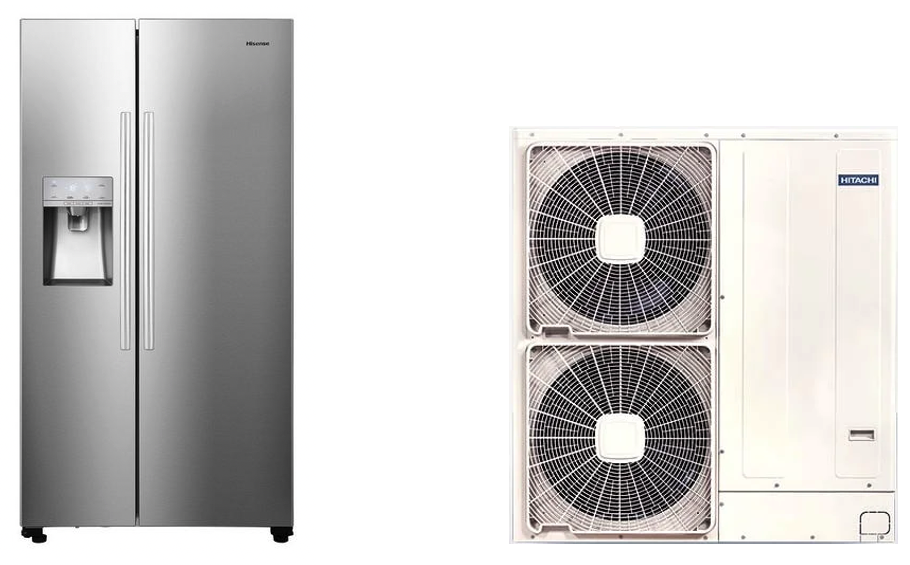
A heat pump and a fridge are intrinsically very similar in their mechanical workings.
Most everyone has a heat pump in their home already – a fridge. To heat (or cool) a house, the big difference with a fridge is the amount of volume being thermally treated. Less obviously, although no less important to the respective system performance, might be the differences of air tightness of the doors to get in and how affective the thermal enclosures are at slowing down energy transfer from inside to outside (or outside to inside). However, the mechanical similarities are strong:
A heat exchanger – to extract heat energy from a given medium
A refrigerant gas (with a low boiling point) – to carry the heat transfer
A compressor – to raise the temperature of the evaporated vapour through pressurisation
An expansion valve – to cool and condense the refrigerant back to liquid to complete the circuit
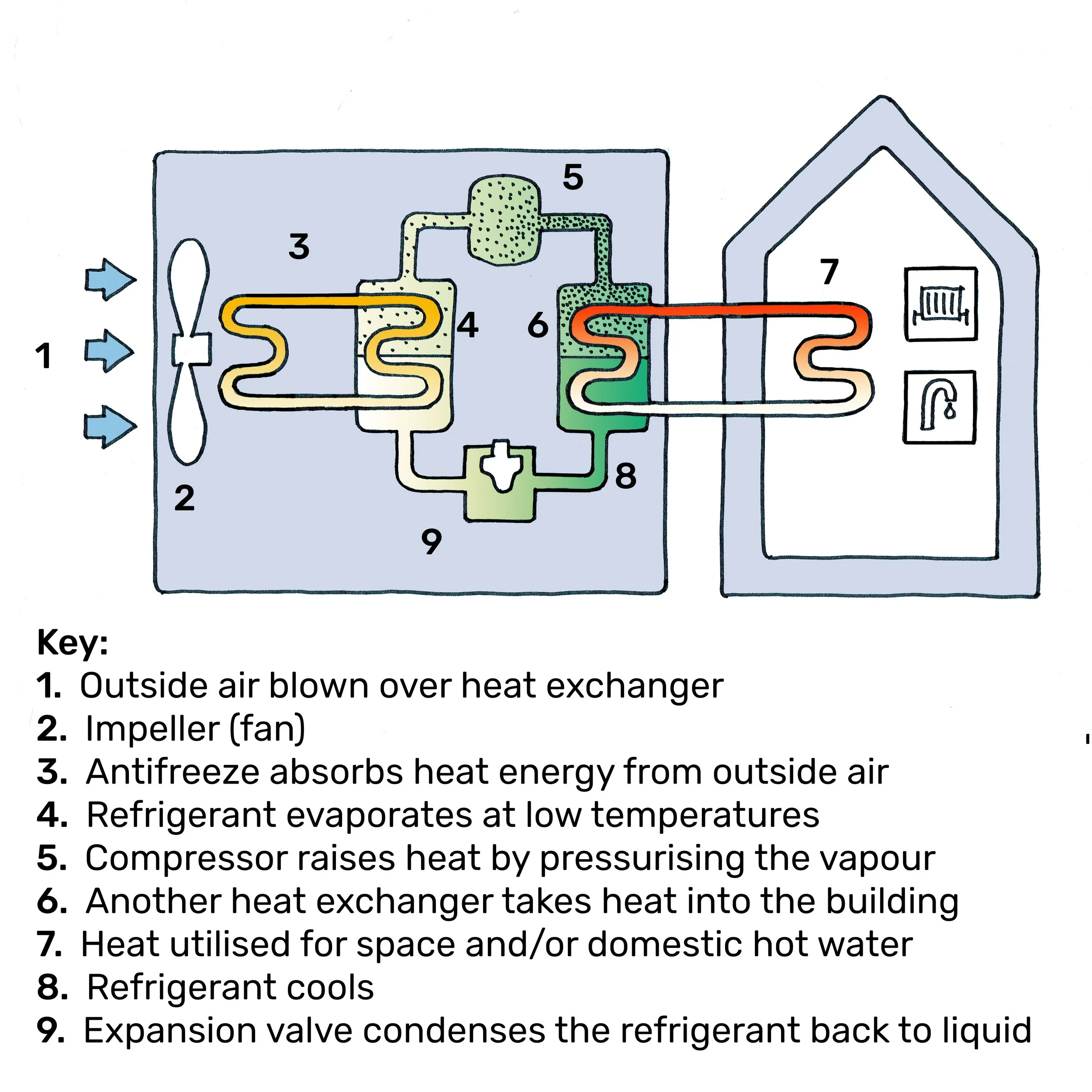
The workings of an air source heat pump shown schematically. Image credit: Deeper Green
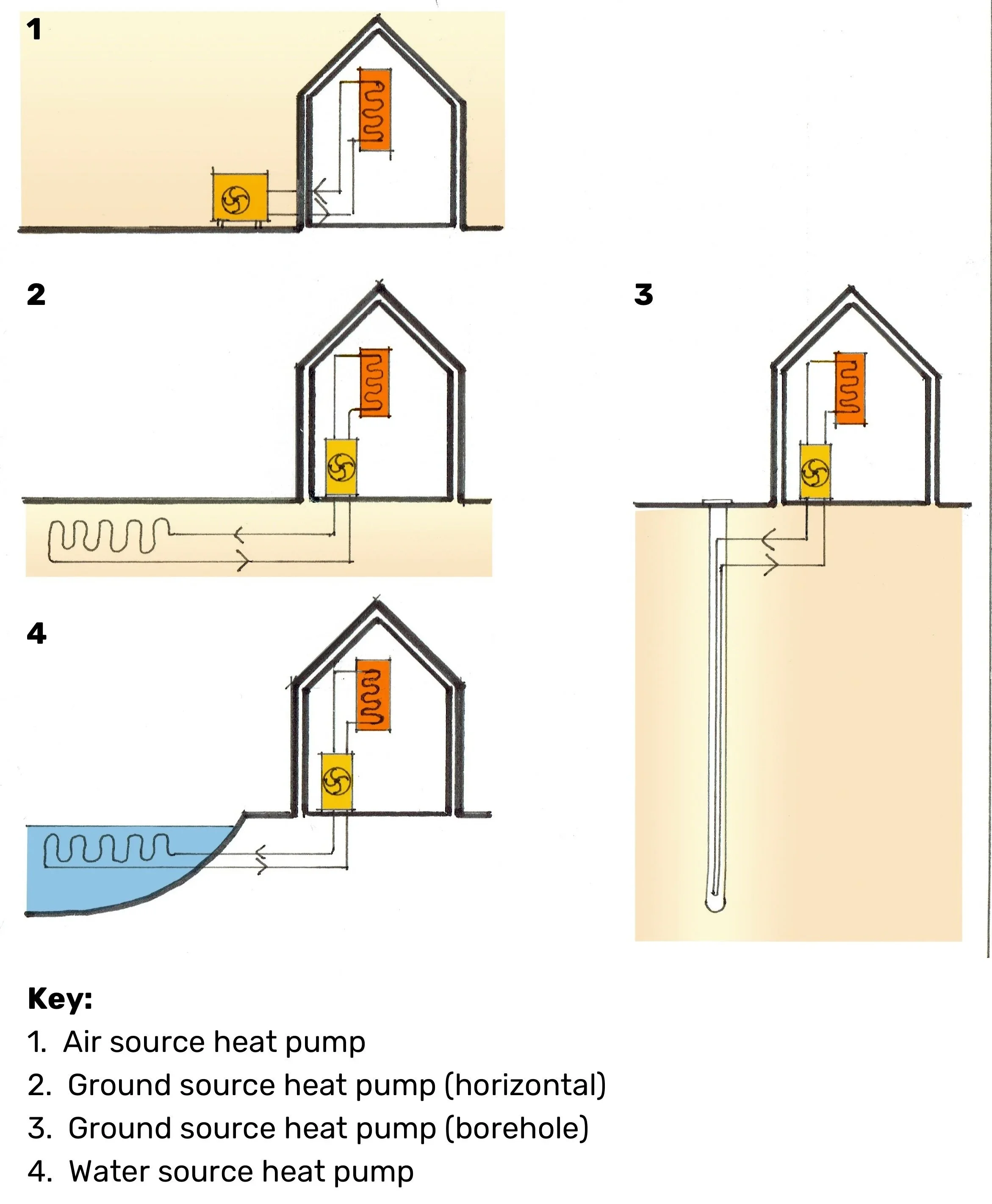
Heat pumps extract heat typically from air, ground or water. By far the cheapest of these technologies are air-source heat pumps. Image credit: Deeper Green
The magic bit…
Of all the forms of electric heating available, heat pumps are by far the most efficient. And the cheapest of these is an air source heat pump.
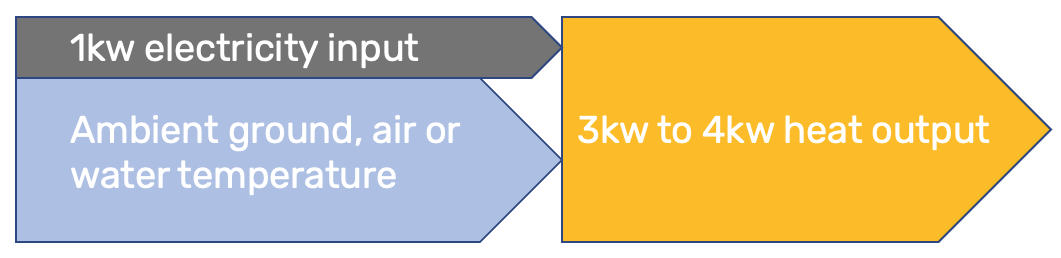
Heat pumps are incredibly efficient because they will typically use 1 unit of input energy to create 3 or 4 units of output energy. Image credit: Deeper Green
Heat pumps take a unit of input electrical energy and use that to extract and concentrate heat energy from the surrounding medium (air, ground or water) to produce say three or four units of heat output. Some are better than others and the industry has assigned a metric to help compare market offerings. This is known as the ‘coefficient of performance’ (CoP). A CoP of 4 equates to 400% efficiency and 3 is equal to 300% and so on. Compare that to direct electric heaters, like those you might wheel around and plug into a wall socket, and they will only deliver a CoP of 1!
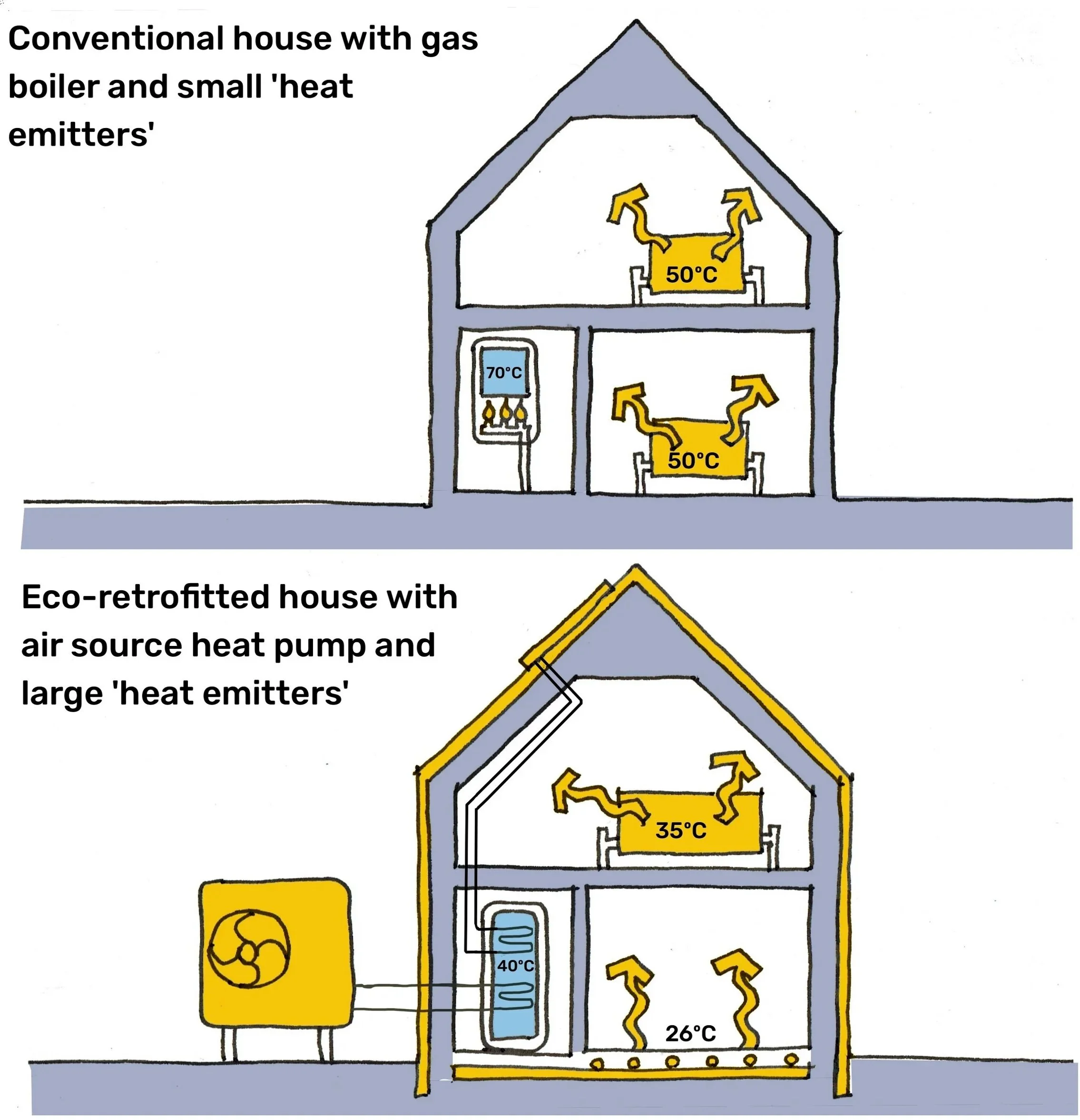
Gas boilers can easily make 70ºC flow temperatures but not so heat pumps. To work cost-effectively, heat pumps should be designed to work with flow temperatures ideally no higher than 40ºC. This typically requires either larger ‘heat emitters’ (radiators, underfloor heating etc), more thermal insulation or a combination of both. Image credit: Deeper Green
Heat pumps can extract heat energy even from freezing air. They just have to work harder. However, heat pumps work most efficiently and most cost-effectively when they only have to lift temperatures up very slightly. In a house with a wet radiator network, this means a successful design should be limited to flow temperatures in the heating pipes of no more than say 40ºC when it is -5ºC outside. To slow down the rate of heat loss from inside to outside, such that that this design standard can be achieved, some energy efficiency upgrades of your property may be required.
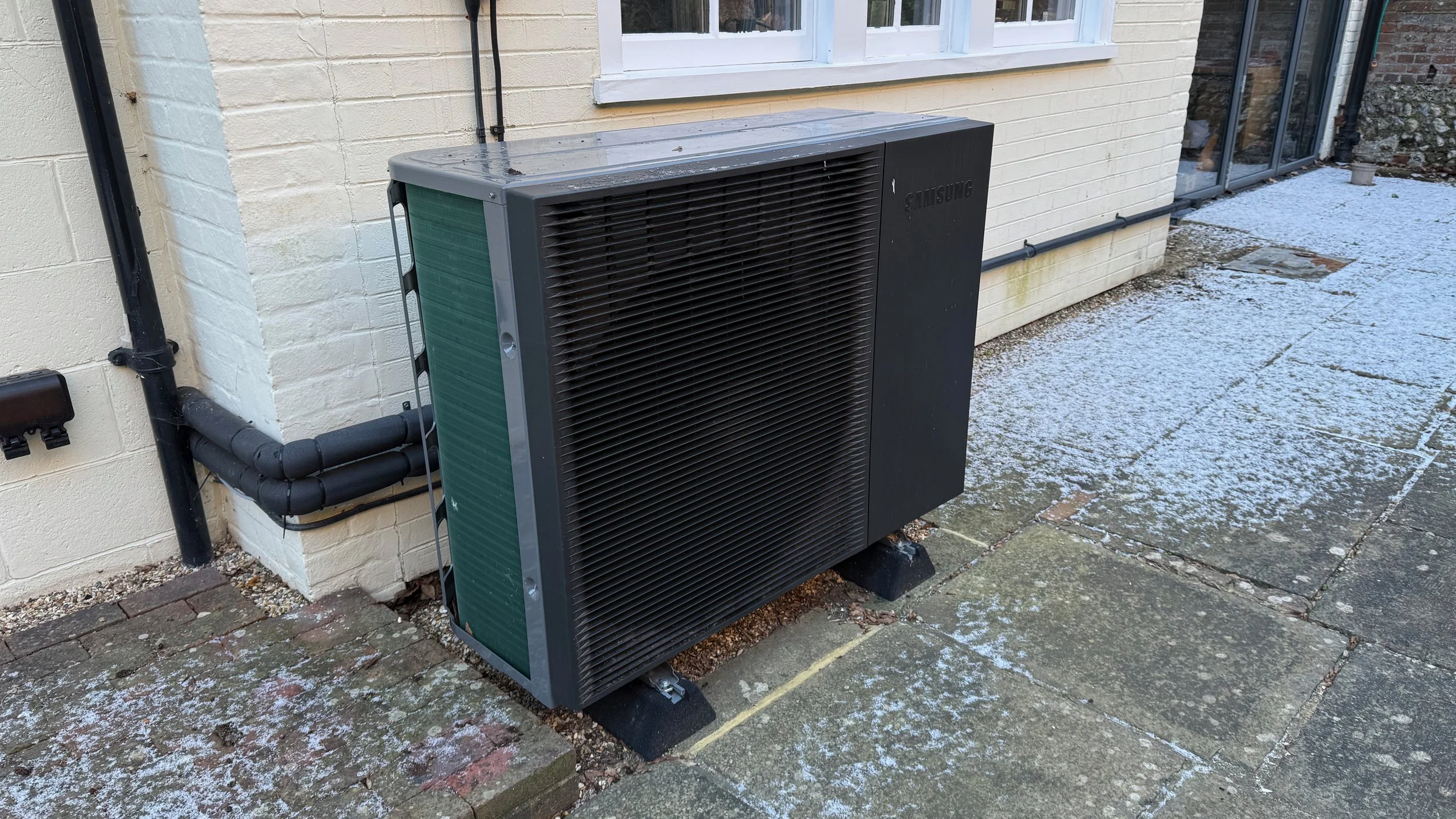
The above heat pump was comfortably keeping a large but modestly insulated house cosy in below zero conditions. Image credit: Deeper Green
And, like a fridge, some heat pumps can do cooling
Typically, heat pumps which do cooling are air to air units. In other words, they do not heat water for use in radiators. They have a fan convector unit in the space which blows either warm or chilled air around. If a radiator was to have chilled water in it, the panel would become wet with surface condensation. However, in theory, you can use cooled water in underfloor heating to do comfort cooling.
How I would need to adapt my house
The ‘Fabric First’ approach
For years energy experts have promoted the importance of the so-called ‘fabric first’ approach.
The principle is based on doing enough energy efficiency improvements to a property to minimise energy in-use costs (and carbon expenditure). In the age of heat pumps, this is also very important because, to make this heating technology work effectively with a long service life, the heat pump needs to be sized accurately for the expected heat load. Therefore, do the energy efficiency work first and then, when you have saved up enough money, you can transition from fossil-fuel to electric heating.
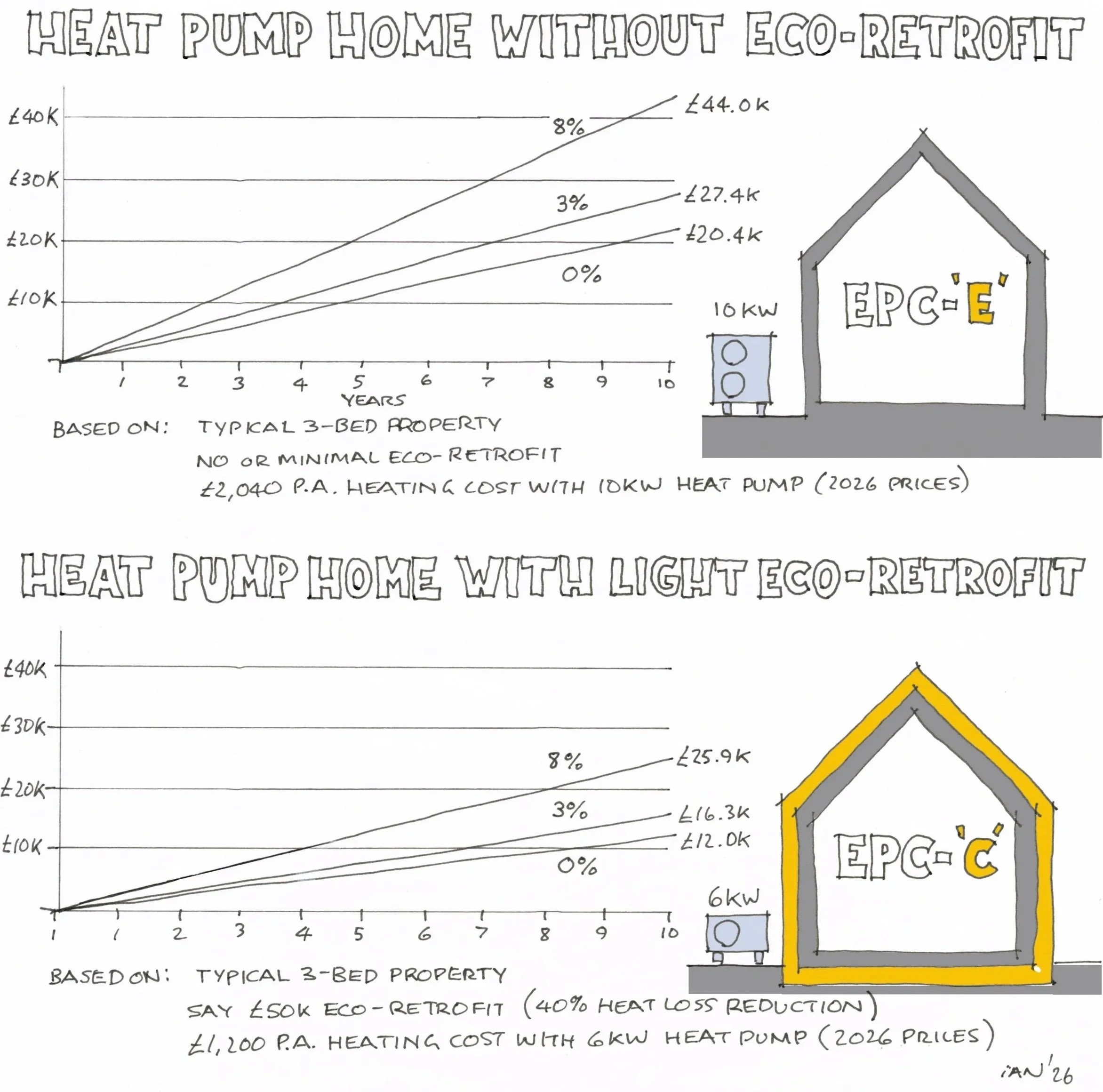
The above comparison is based on direct research carried out by Deeper Green. It takes energy calculations from a number of properties where we have looked for the sweet spot of energy efficiency upgrades (something like a 40% reduction in heating load) over that of an untreated house. It then compares the running costs over a 10 year period (2026 prices used) with varying degrees of energy price inflation factored in. Based on payback periods alone, it has always been tricky to justify fabric efficiency upgrades. Image credit: Deeper Green
However, in recent years the ‘Fabric First’ concept has been challenged because of the high costs and overly long payback periods associated with improving the energy efficiency of the building fabric versus the faster payback periods of on-site energy generation and a decarbonising electricity grid.
It’s not just about payback periods
It’s not just about having short payback periods; another reason we might do energy efficiency improvements to the building fabric concerns the improving of…
‘thermal comfort’
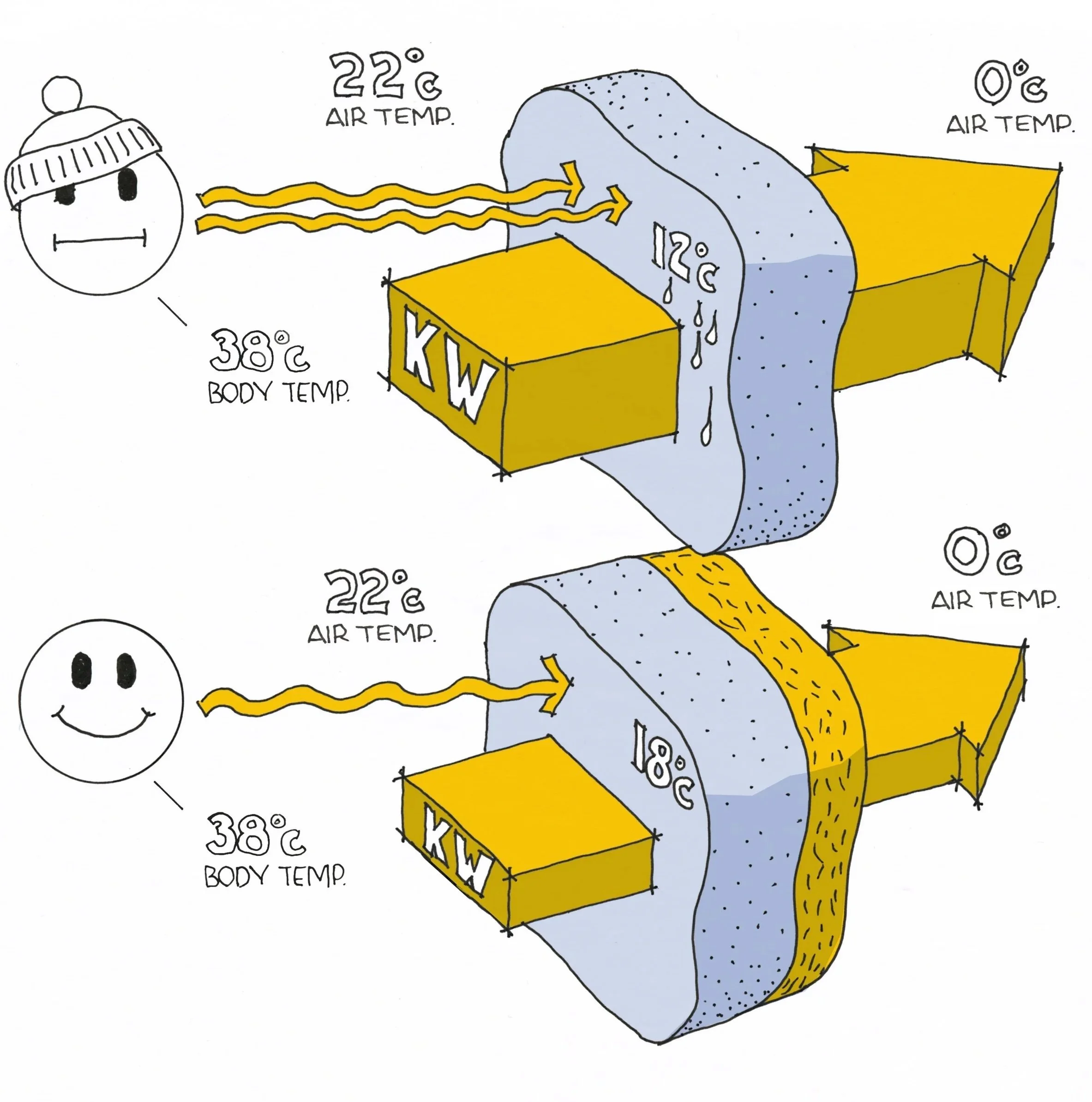
Even if you can raise air temperatures to a satisfactory level, if surrounding surfaces are much colder than you are, you will continue to feel thermal discomfort. In fact, your body will emit radiant heat energy to the colder surface. Imagine the rate of heat loss as if it were a conveyor belt going through the building fabric – the more insulation, the slower the conveyance to outside. Image credit: Deeper Green
Some people instigate eco-retrofit on a property because they see it as their…
‘forever home’
People may want to invest in the efficiency of their home if they have an intention to be there for the longterm; a place to raise a family, where grown-up children, with their own future families, a dwelling adaptable to the restrictions of old-age. Over such time periods, a significant investment in the energy-efficiency and climate resilience of a property is more easily justified – and enjoyed.
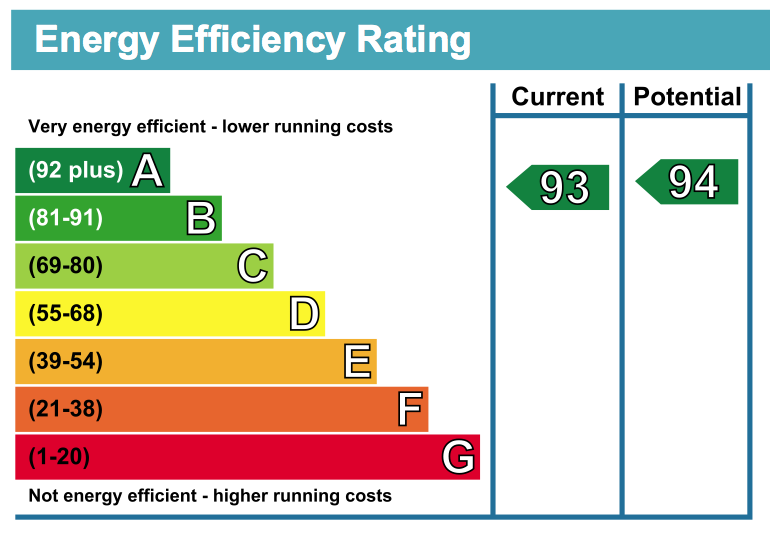
Home buyers are finally starting to appreciate eco-retrofit investment in property asking prices. Image credit: Deeper Green
People may also justify thermal efficiency upgrades on the basis of…
‘a return of investment’
As always intended by the Government, the use of Energy Performance Certificates has finally started to influence home buyer’s and renter’s decision-making in the property market. A ‘C’-rating sounds a lot cheaper to run than an ‘E’-rating especially during times of geo-political destablisation. And an ‘A’-rating may go some way to ensuring a home is resilient to the energy and resource challenges that the 21st century seems likely to unleash in ever greater severity and frequency.
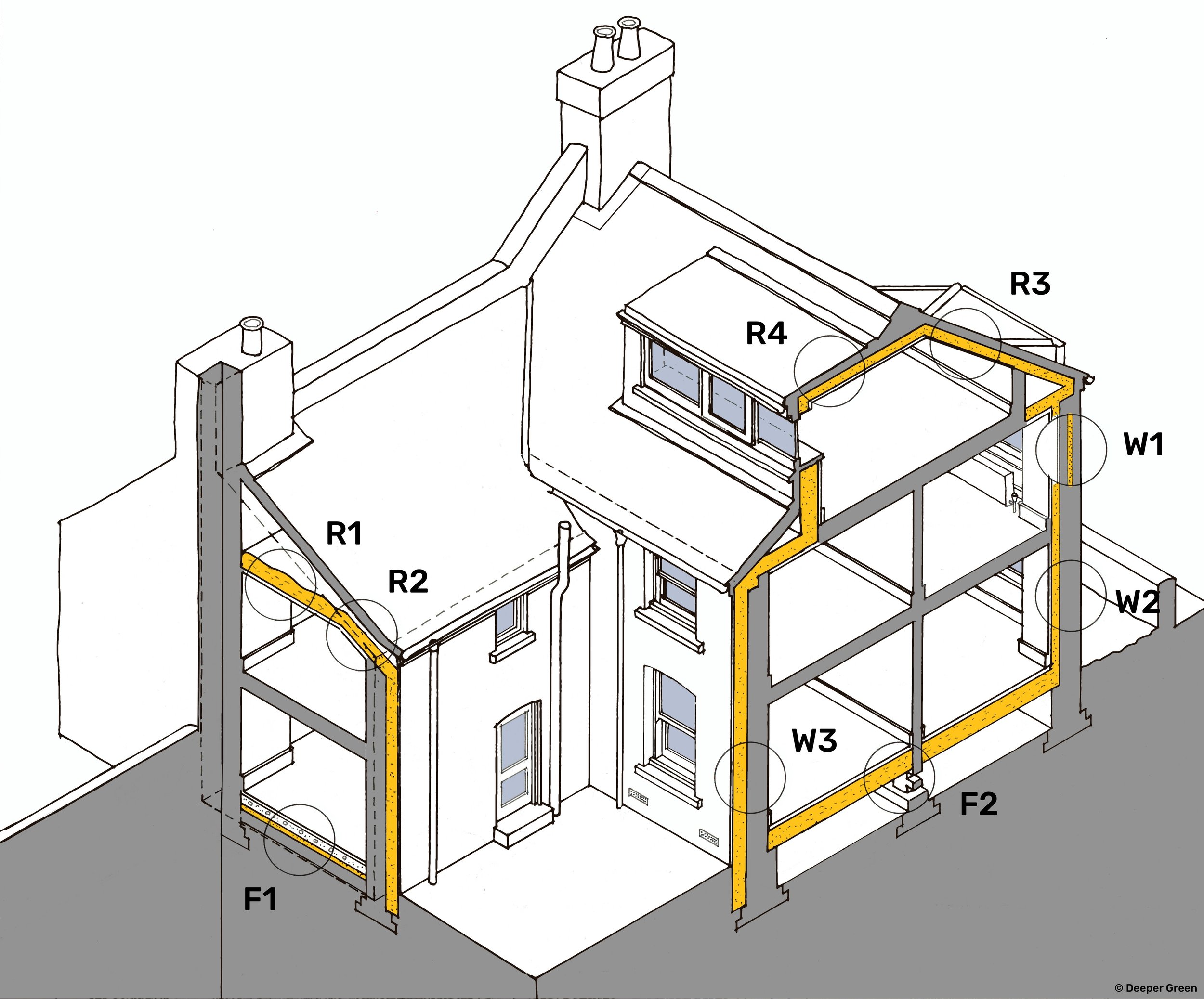
There are many thermal upgrades that can be carried out on existing buildings. Understanding how they will effect the building fabric and the internal air quality is critical towards ensuring the works are appropriate and do not lead to unintended consequences. Upgrading the efficiency of the house with more insulation and better airtightness will typically also require a more capable ventilation strategy. After all, you wouldn’t survive long in a fridge!
Use the right material and insist on high-quality workmanship
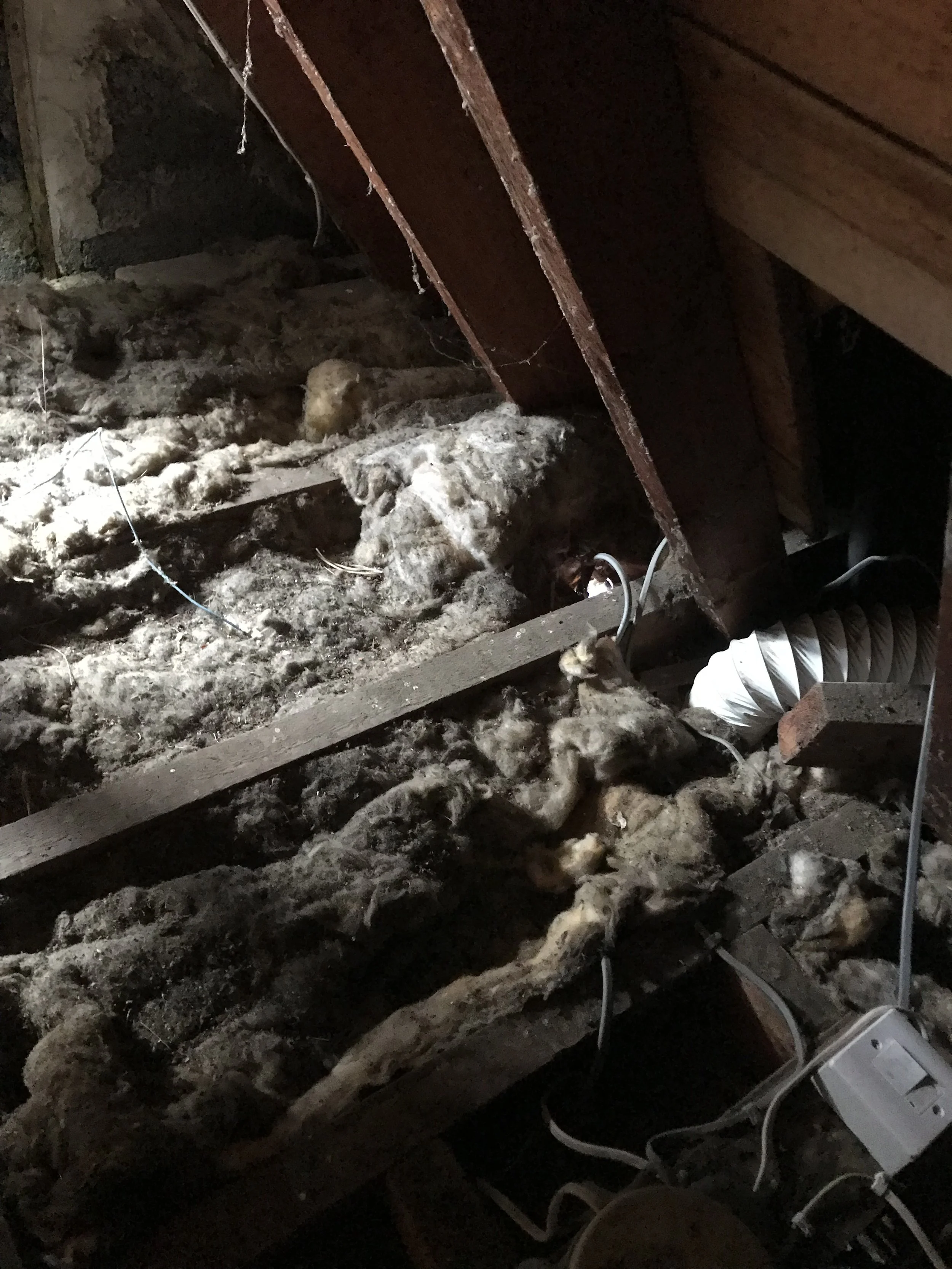
Poor quality and poorly installed loft insulation provides little in the way of energy conservation. Image credit: Deeper Green
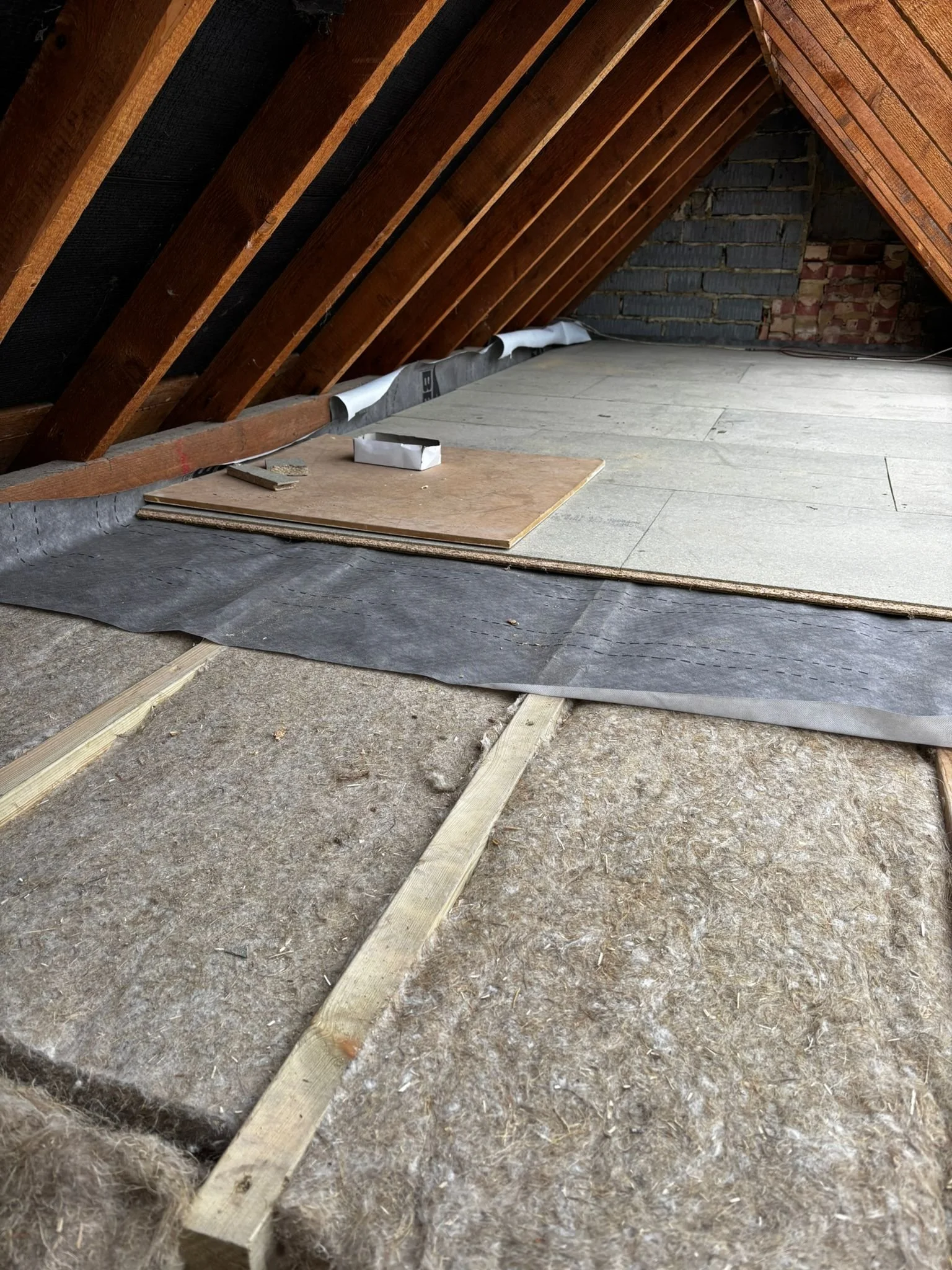
Using the right materials and ensuring good workmanship is crucial towards ensuring a successful eco-retrofit. Image credit: Re-Gen
Rules of thumb
In trying to provide a handy checklist of energy-efficiency measures, which maybe seen as a sensible minimum to have before committing to a heat pump installation, Deeper Green have come up with the following:
Do you have between 200 and 270mm of loft insulation?
Do you have double-glazed windows or good quality secondary-glazing?
If you have suspended timber floors, are your floors carpeted with good quality underlay?
Do you have good air movement and replacement fresh air in your house during the heating season?
Then your house is probably suitable for a heat pump. However, a lot depends on the external walls as this is typically the largest single thermal element on a building. Very possibly if the walls, and to a lessor extent the floors, remain cold during the heating season, you may still have high levels of thermal discomfort to contend with.
If you feel you need help in working out what might be a sensible range of energy efficiency measures to carry out on your home, you may be interested to learn more about Deeper Green’s Eco-Retrofit Scoping Studies. To find out more click on the following link: